"Unshackling" the Gold Jewelry Industry
After 14 years, enterprises engaged in jewelry and fine-art gold manufacturing will no longer be required to obtain sub-licenses starting from July 1.
Removal of Sub-Licenses for Jewelry Gold Production and Trading
On May 29, the State Bank of Vietnam (SBV) released a draft amendment to Decree No. 24/2012 on the management of gold trading activities. One of the most notable changes in the draft is the elimination of sub-license requirements for the production, processing, purchase, and sale of jewelry and fine-art gold products (JGM) starting July 1. At the same time, the SBV will no longer conduct inspections or audits of jewelry gold manufacturing activities as stipulated under the previous regulations.
However, the draft still requires organizations and individuals engaged in the production, processing, purchase, and sale of jewelry and fine-art gold products to comply with regulations concerning product quality, standards, measurements, product labeling, price listing, invoices and documentation, taxation, fire prevention and safety, environmental protection, consumer rights protection, anti-money laundering measures, and other relevant laws.
The director of a jewelry manufacturing company based in Ho Chi Minh City explained that obtaining a jewelry gold manufacturing license currently takes between three and six months, as businesses must satisfy various requirements and complete extensive documentation. The most critical requirements involve fire safety and environmental protection. Even jewelry shops that merely employ repair technicians are required to obtain permits. Therefore, eliminating these sub-licenses will reduce administrative procedures and shorten processing times for businesses.
Mr. Nguyễn Văn Dưng, Chairman of the Ho Chi Minh City Association of Goldsmiths and Jewelers, expressed his satisfaction:
"For many years, the Vietnam Gold Traders Association (VGTA) has continuously proposed removing jewelry and fine-art gold production from the list of conditional business sectors. The amended Investment Law, passed in 2025, officially removed jewelry and fine-art gold from the list of conditional business sectors. The draft amendment to Decree 24/2012 is therefore excellent news for the jewelry industry."
He noted that internationally, jewelry gold production and trading are generally treated as ordinary manufacturing and commercial activities rather than conditional business sectors. Countries such as Thailand, Singapore, Indonesia, and the UAE even provide incentives and support policies to promote the industry's development for both domestic consumption and export purposes.
"This is why these countries export between USD 5–7 billion worth of jewelry and fine-art gold products annually," Mr. Dưng explained.
Transforming the Jewelry Industry into a Key Economic Sector
Mr. Huỳnh Trung Khánh, Vice Chairman of VGTA, commented that the directive issued by Party General Secretary and State President Tô Lâm in Notice No. 211-TB/VPTW dated May 30, 2025, encouraging the development of Vietnam's jewelry gold market and positioning Vietnam as a regional hub for high-quality jewelry manufacturing and exports, represents a strategic breakthrough for the industry.
According to Mr. Khánh, Vietnam's businesses possess sufficient capabilities and expertise not only to meet domestic demand but also to compete in global export markets.
However, he emphasized that after removing sub-licenses, authorities must promptly address the issue of gold raw materials by allowing imports of raw gold to satisfy manufacturing needs.
In recent years, Vietnam's annual demand for gold used in bullion and jewelry production has averaged around 50 tons, equivalent to approximately USD 5 billion per year (or about USD 420 million per month). After processing, roughly half of this output serves domestic demand, while the other half is exported.
This means that 25 tons of gold used for exports could generate between USD 3.5 billion and USD 5 billion in export revenue. Labor value accounts for more than 30% of the exported product's value. Therefore, allowing businesses to import raw gold for jewelry manufacturing would not only satisfy domestic demand but also generate significant foreign currency earnings for the country.

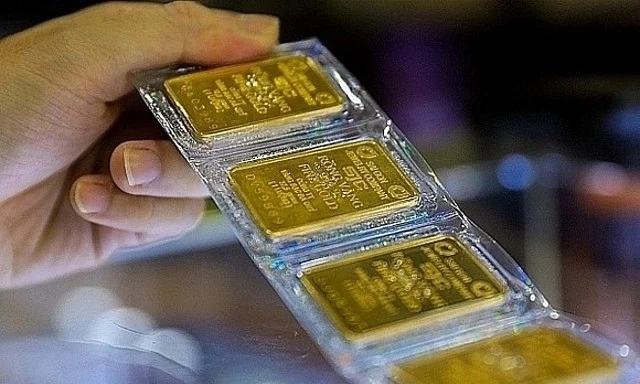
Sub-licenses for jewelry and fine-art gold manufacturing will be abolished starting July 1.
Photo: NGỌC THẮNG
Ensuring a Sustainable Future for the Jewelry Industry
Mr. Nguyễn Văn Dưng believes that achieving Vietnam's ambition of becoming a regional center for high-quality jewelry manufacturing and exports will require additional measures, particularly regarding access to raw materials.
In reality, Vietnam's gold jewelry market experienced continuous decline between 2023 and 2025, with consumption falling by an average of 15% annually. Many jewelry stores were forced to close, causing sales staff and production workers to lose jobs or switch industries.
One major cause of the downturn has been the shortage of raw materials. Manufacturing enterprises have struggled to maintain operations and therefore hesitate to make substantial investments, causing Vietnam to miss opportunities to strengthen its competitive advantages.
Meanwhile, neighboring countries such as Thailand and Indonesia have become leading jewelry exporters despite possessing comparable—or in some areas even lower—levels of expertise.
According to Mr. Dưng, the root cause lies in Vietnam's practice of managing jewelry and fine-art gold together with investment gold bars.
He therefore recommends treating jewelry and fine-art gold products as consumer goods in line with international practices, while investment gold bars should remain under central bank supervision. This approach would allow Vietnam to develop the jewelry sector as a strategic industrial industry.
Countries with highly developed jewelry industries, such as China, Thailand, and Indonesia, manage the sector as part of their consumer manufacturing industries and provide detailed support policies, including specialized industrial zones and integrated value-chain development programs.
"Managing Vietnam's jewelry industry as an industrial sector would both preserve and develop a traditional handicraft with strong national identity and help position Vietnam as a leading exporter of jewelry and fine-art gold products worldwide," Mr. Dưng emphasized.
Removing Payment Barriers in Gold Transactions
The draft amendment to Decree 24 also introduces a provision requiring all gold purchase and sale transactions worth VND 20 million or more per day to be conducted through non-cash payment methods.
This amendment addresses difficulties associated with previous regulations requiring transactions to be made through payment accounts held by customers and gold-trading enterprises at commercial banks or foreign bank branches.
The revised regulation would allow customers to use various non-cash payment methods, making it easier for consumers—including foreign tourists—to purchase gold and jewelry products.
Additionally, the draft specifies that the use of credit cards or other credit-based payment instruments for purchasing gold bars must comply with existing regulations governing lending and credit activities.
Thanh Xuân